
Spring production of steamed cheeses: Great taste for a fraction of the price
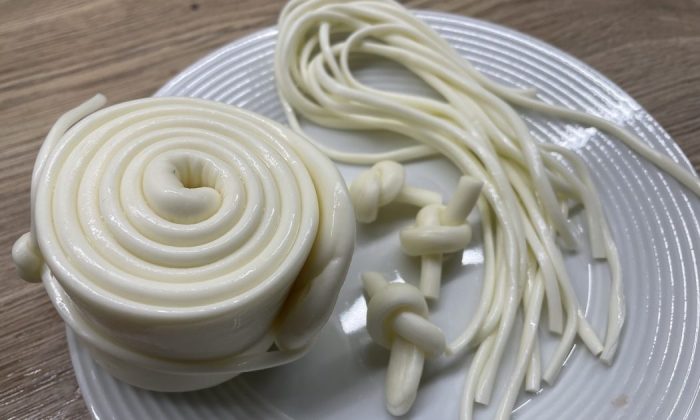
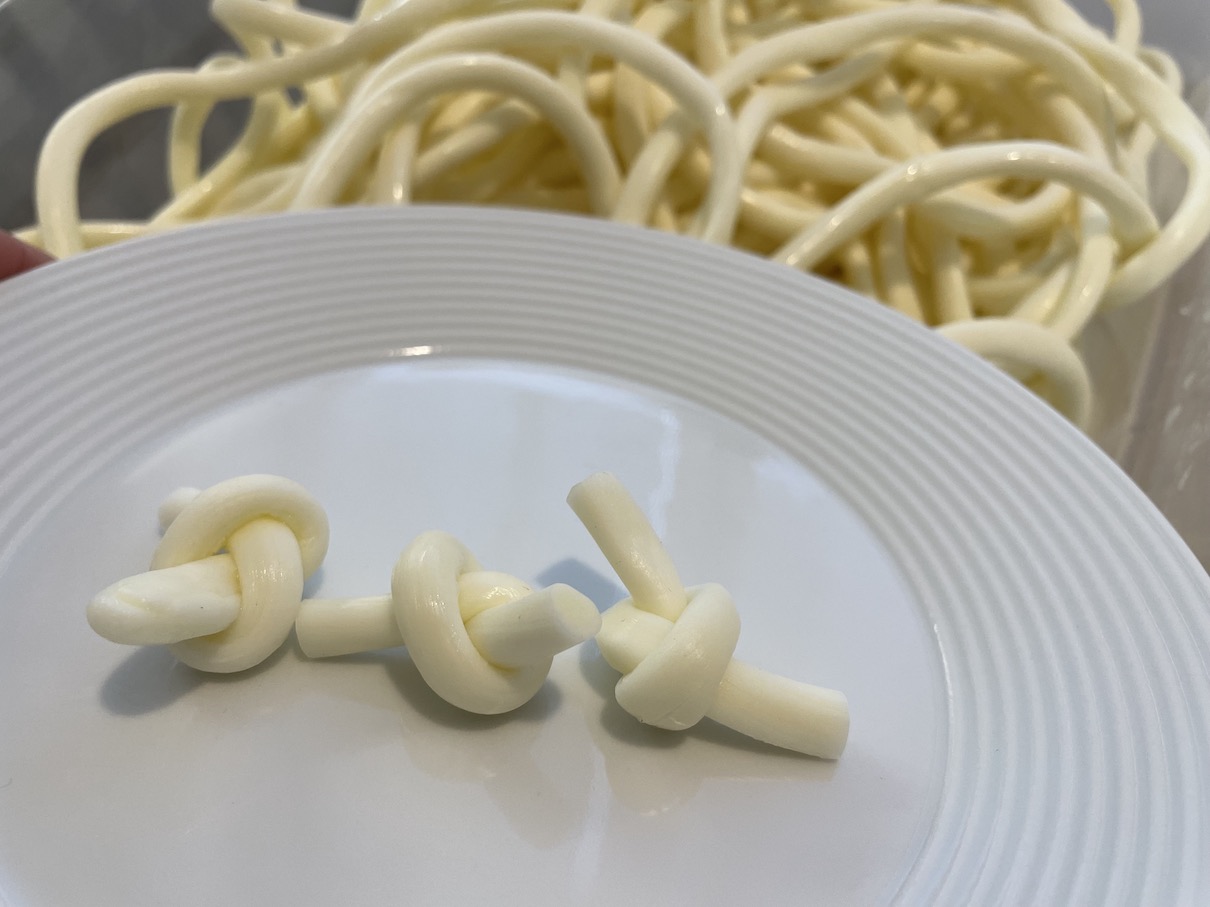
Spring is in full swing, and it undoubtedly brings with it many delicacies. For the past month or so, we’ve been making classic steamed cheeses, which are absolutely delicious. Our string cheese and other varieties simply can’t be compared to the taste of those mass-produced supermarket cheeses. After all, they’re made from unpasteurized cow’s milk, and we do everything by hand. If you’re also interested in cheese and how it’s made, you’ve come to the right place. We’ll reveal the entire process to you in the following lines.
High-quality local milk as the foundation
Undoubtedly. We buy milk directly from cows at the cooperative. It costs us 18 crowns per liter. However, we’ve also encountered much higher prices. We used to pay 30 crowns per liter, which is quite a difference. Plus, the milk from our new supplier seems better to us.
10 liters of milk yields 1 to 1.5 kg of cheese
It also depends on the season and whether the milk is thicker or not. In any case, we get the stated amount from 10 liters of milk.
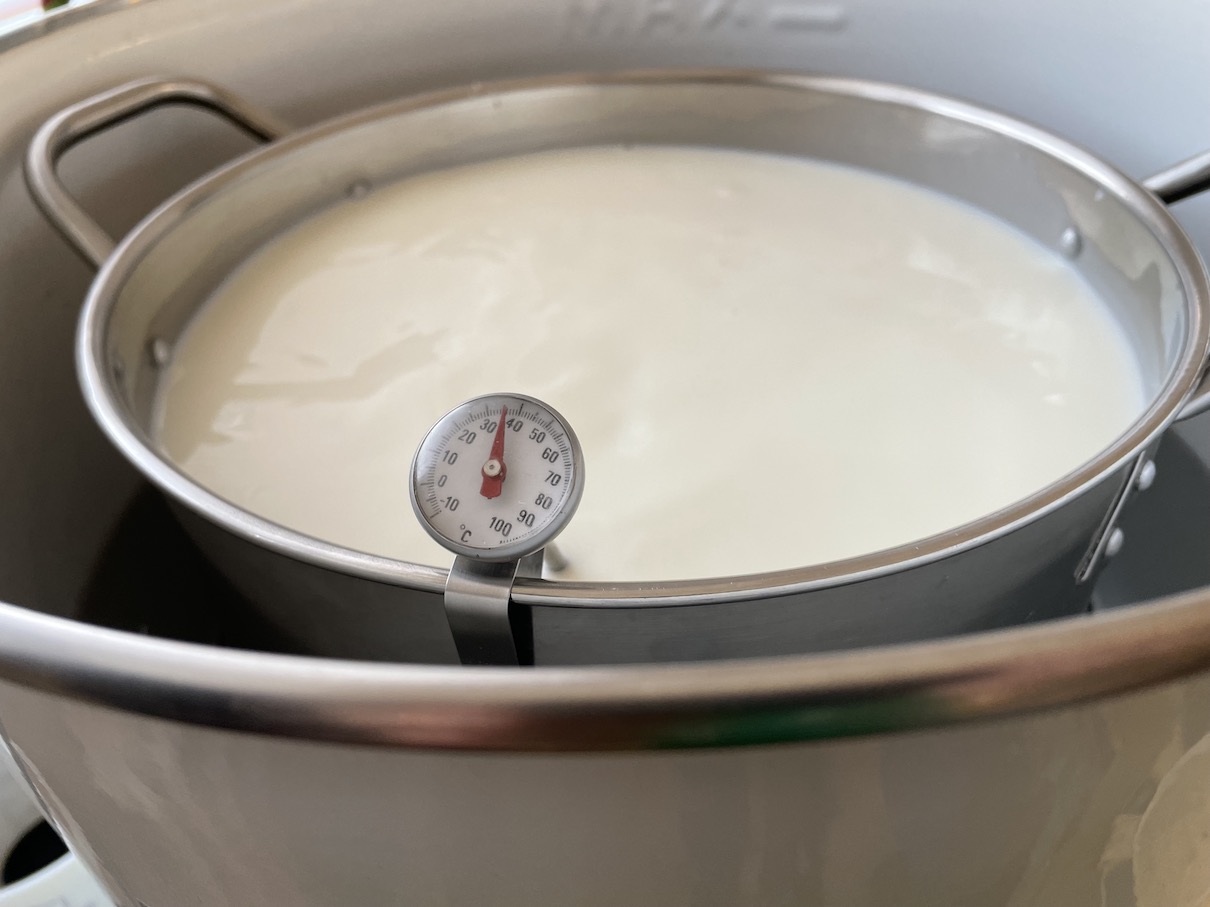
Heat to 36 degrees Celsius and add the cheese cultures
First, we gradually heat the milk to 36 degrees Celsius. Once it’s ready, we can add the cheese cultures. Traditionally, we use about a third of a teaspoon for those 10 liters of milk. We use a culture specifically designed for stretched-curd cheeses. We let it sit for about 30 minutes.
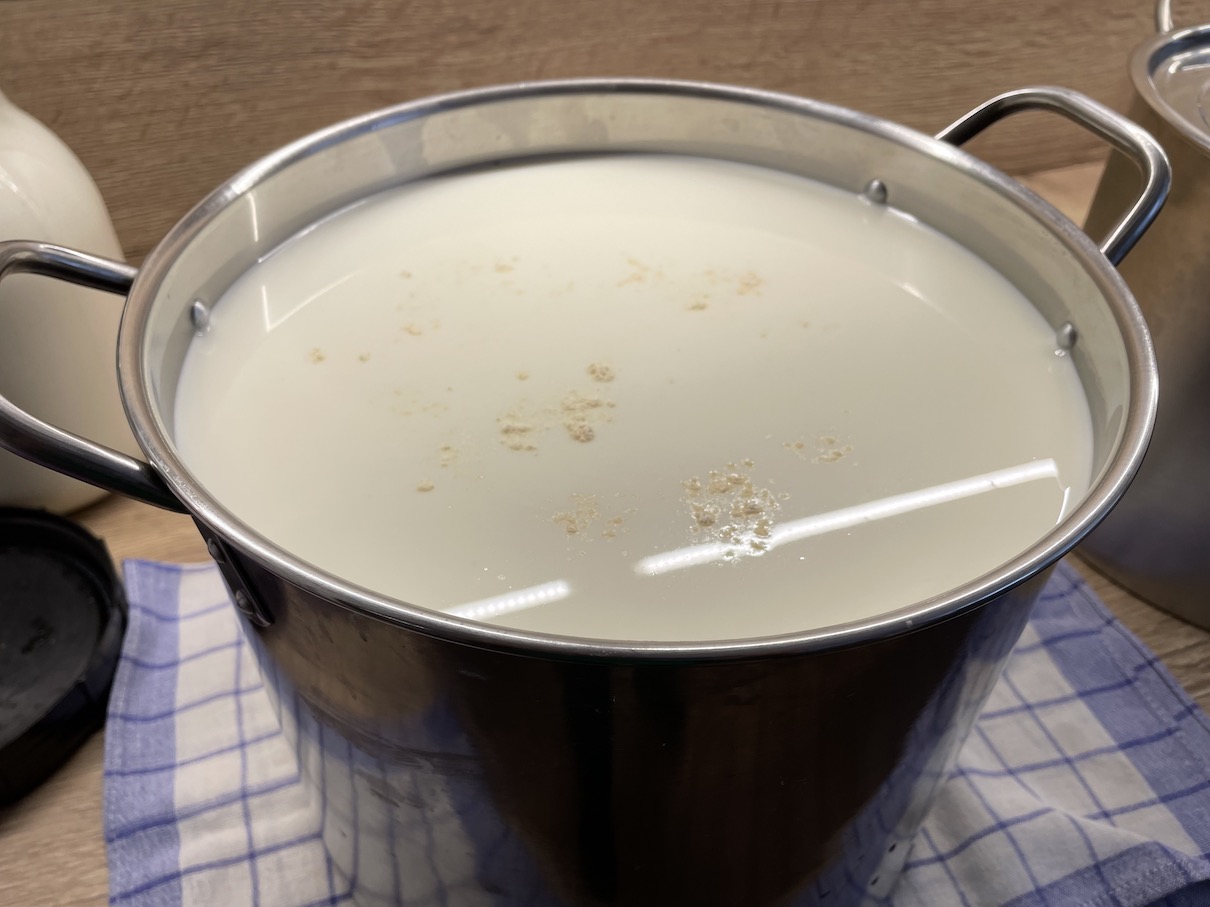
Photo: Radek Stepan
The rennet will form a thick cheese curd
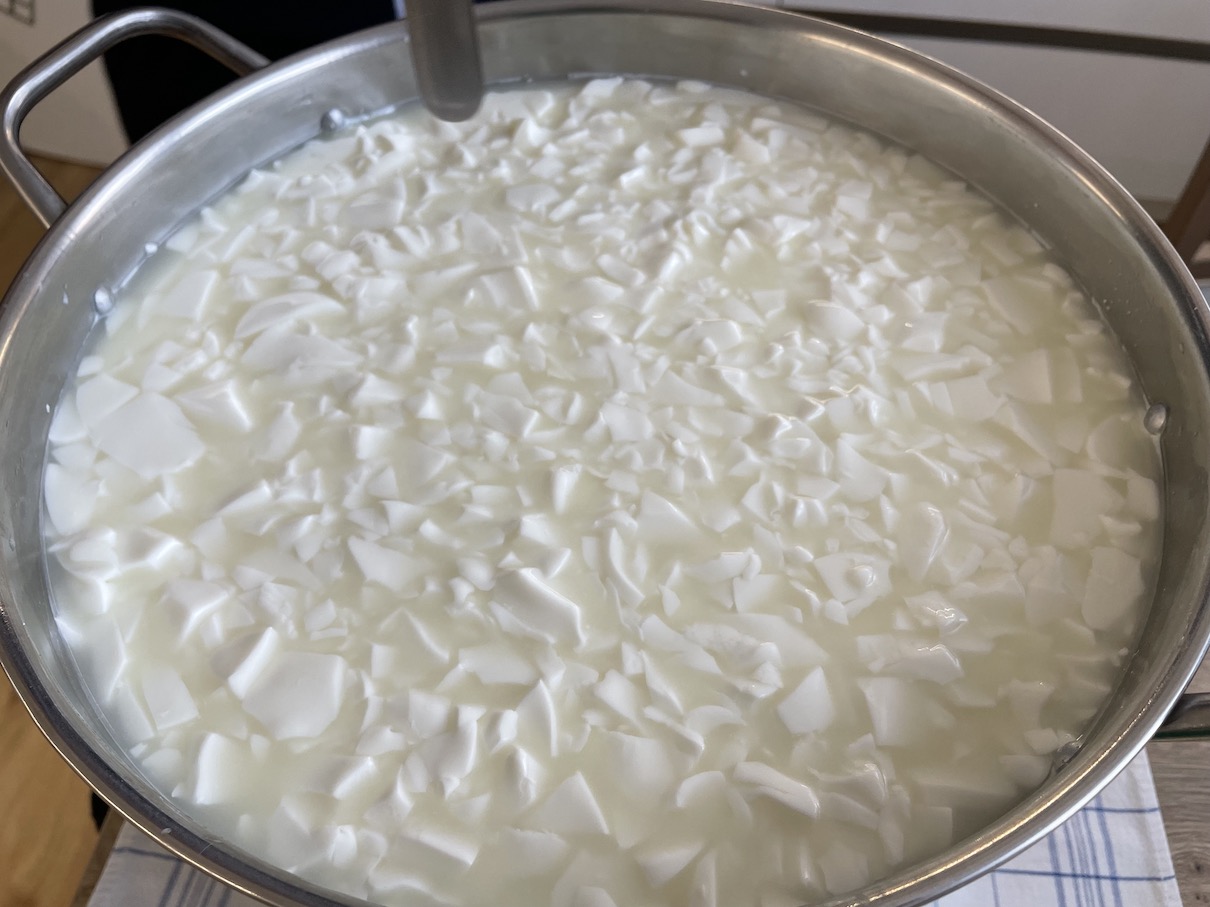
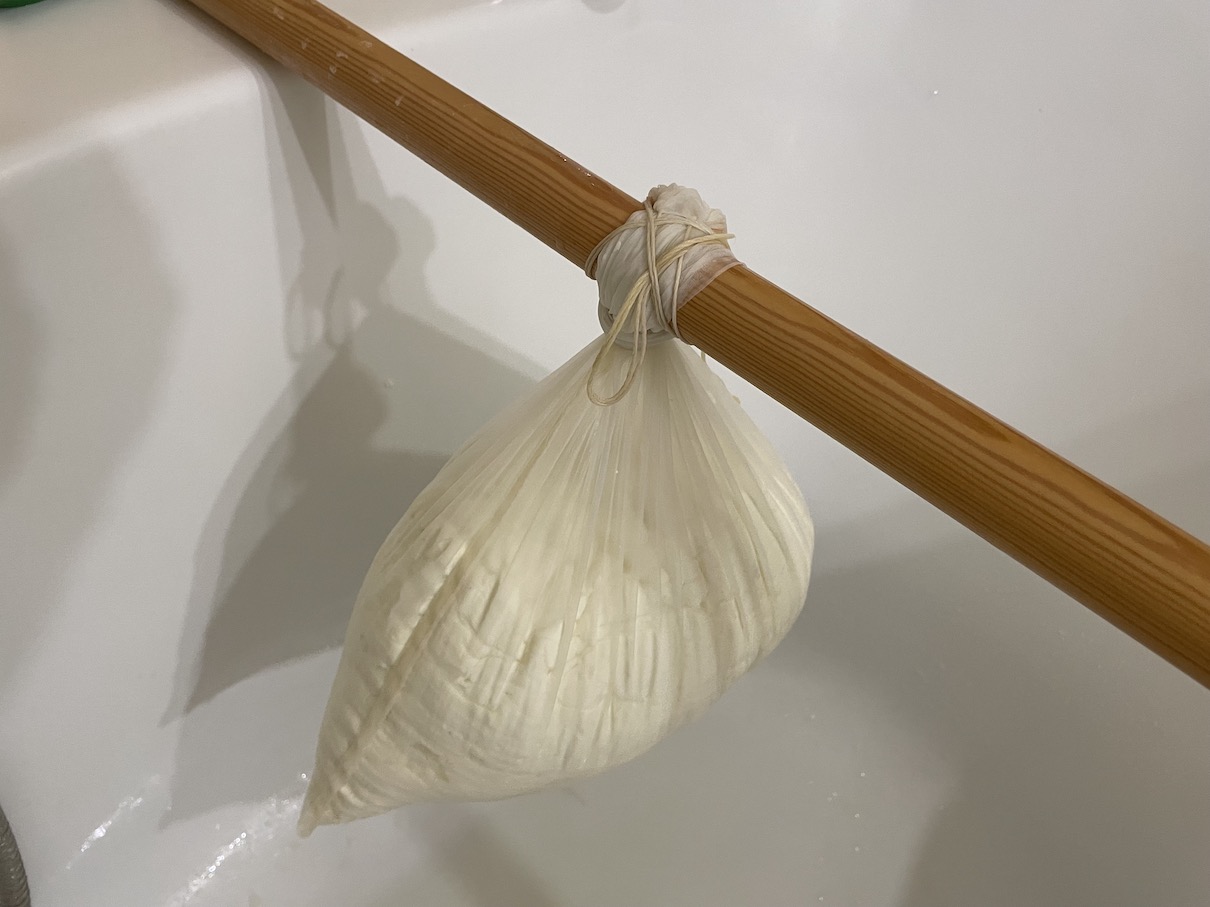
After the specified time has elapsed, add the rennet to the milk. Measure out 2.3 ml of rennet per 10 liters of milk. Mix this with a little boiled, cooled water and then slowly add it to the milk. Stir and let it sit for 45 minutes. After this time, a very thick cheese curd will form. Cut this into small pieces with a knife. Then strain it through a cloth and hang it over the tub to drain.
Acidification of the cheese curd
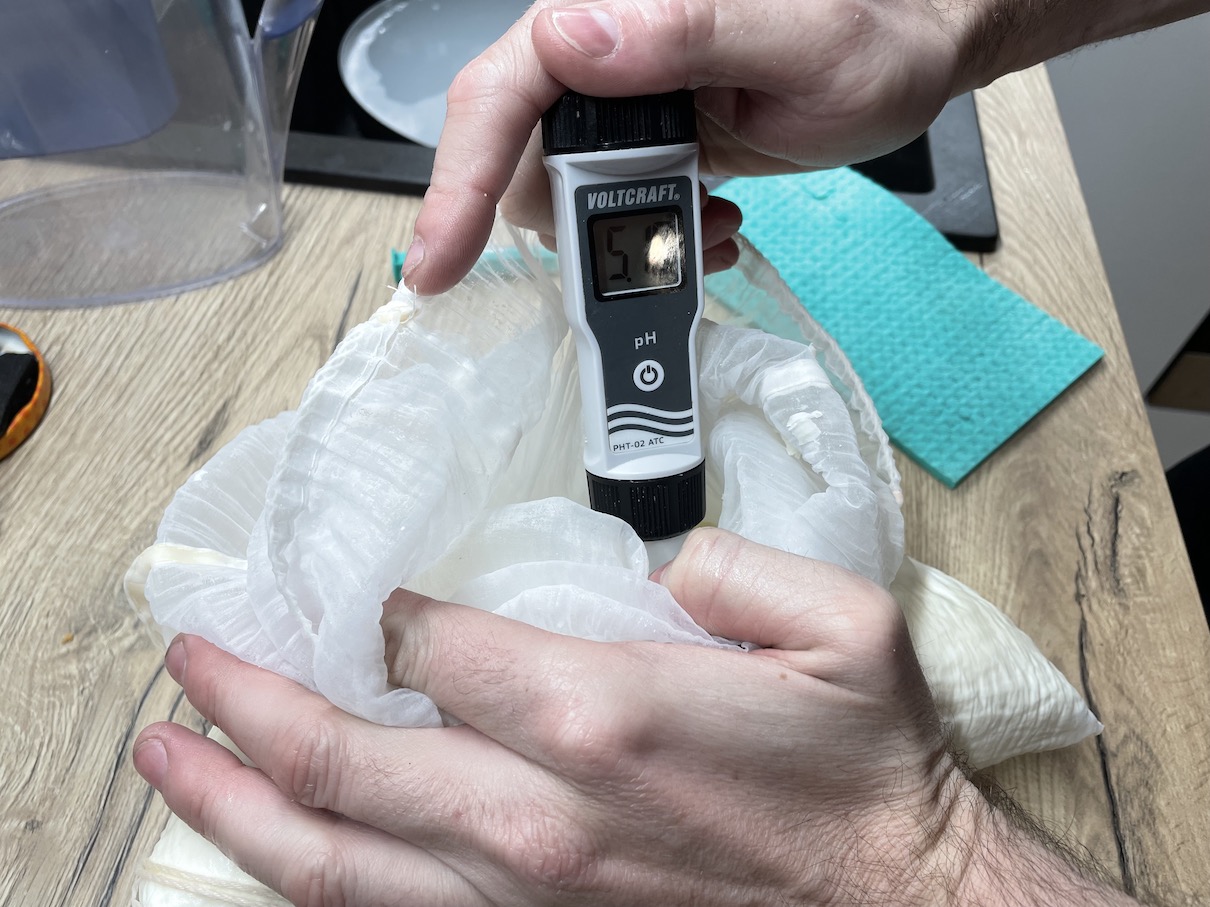
This usually takes about 4 to 5 hours. The curd should reach a pH between 4.7 and 5.2. Once the curd reaches these values, it goes into the refrigerator or freezer. We usually put it in the freezer and take the cheeses out when we have enough time.
Pulling the cheese
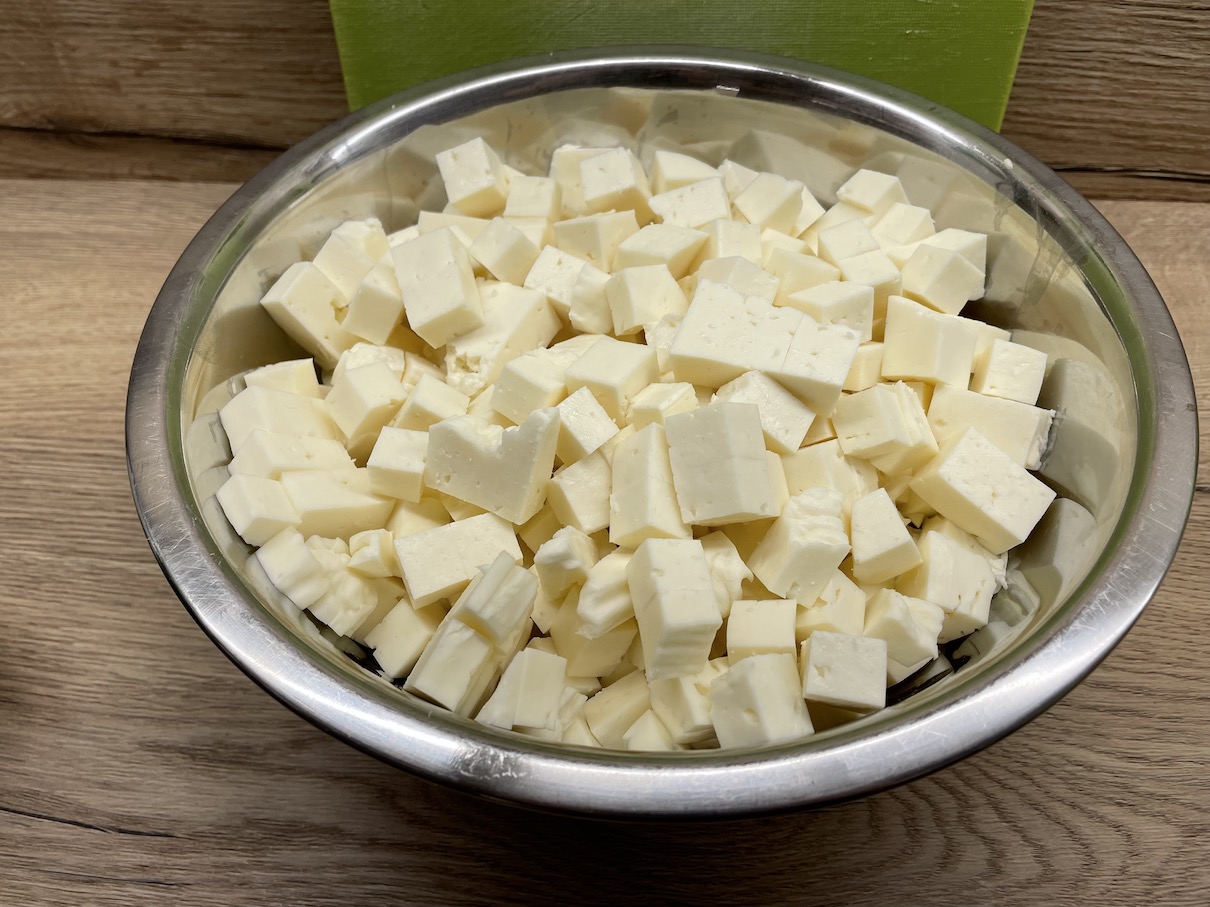
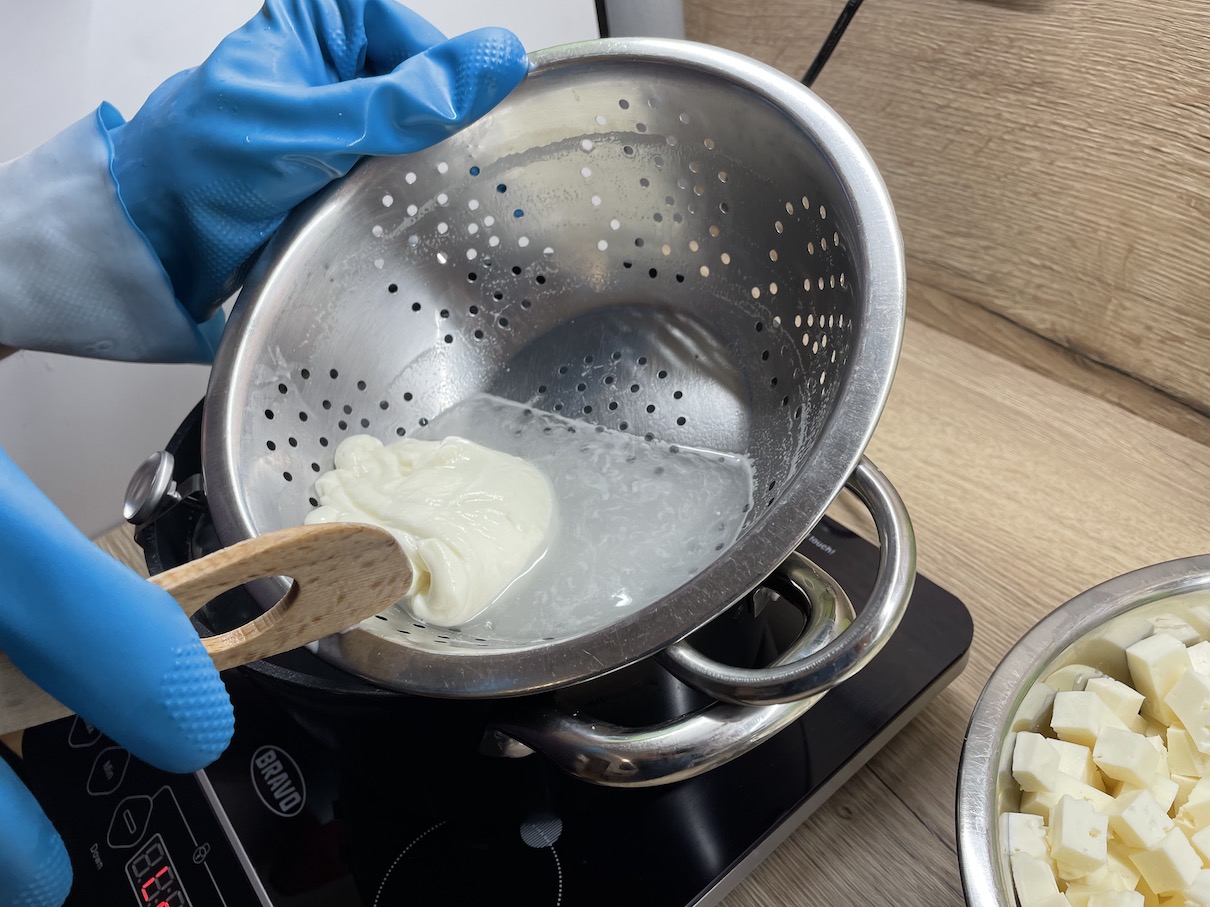
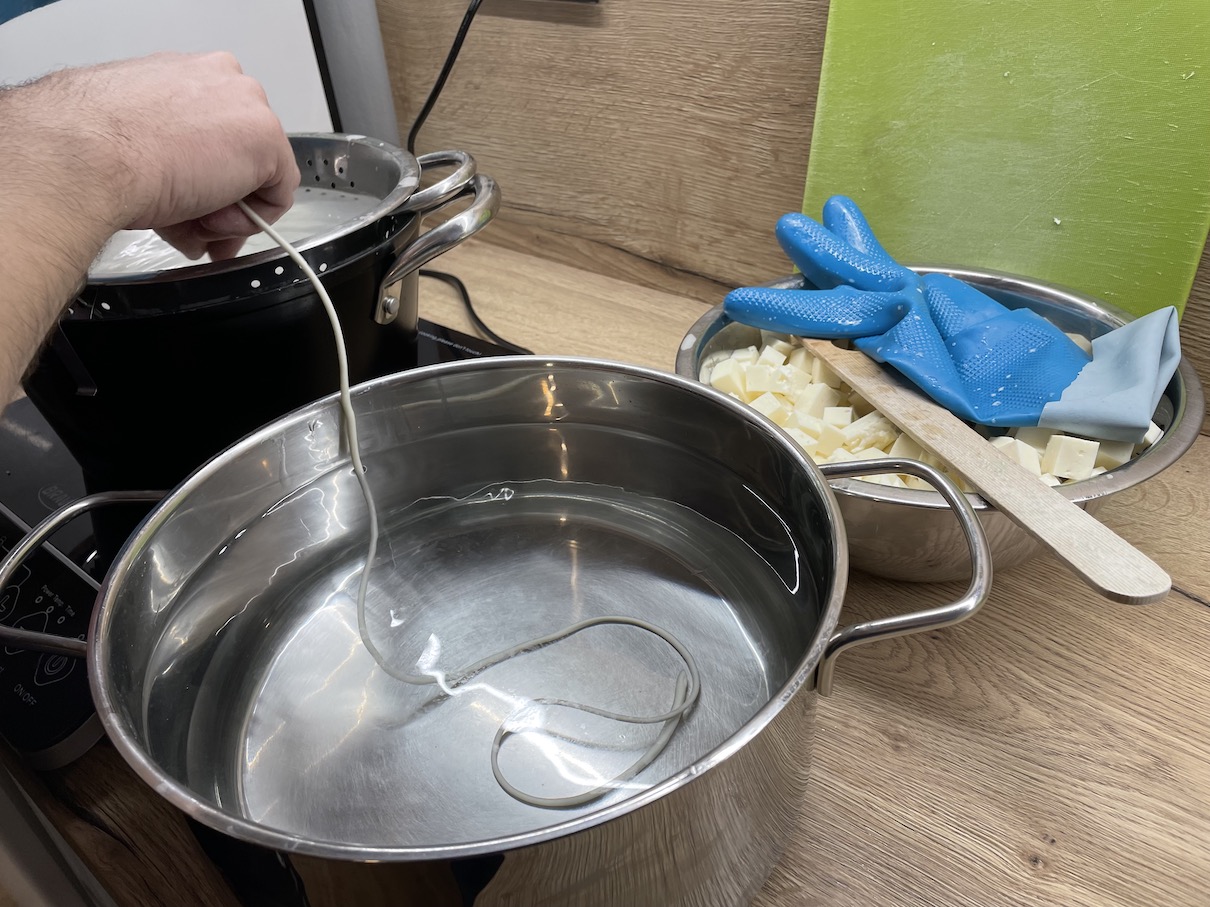
Before pulling, prepare one pot with water around 80 degrees Celsius and another with cold water. You’ll also need a bowl of salted, boiled water. Traditionally, we use 250 grams of salt per 1 liter of water. First, cut the cheese curd into small pieces. Place a handful of pieces into a strainer, which you then submerge in the hot water. Gradually, a dough forms, which you knead. Once you have a shapable piece of dough, begin slowly pulling strands from it into the cold water. They will remain there for a moment while you prepare the next piece of dough. The finished strands will then rest in the salt bath for about 10 minutes. And that’s it. You can see the results for yourself.
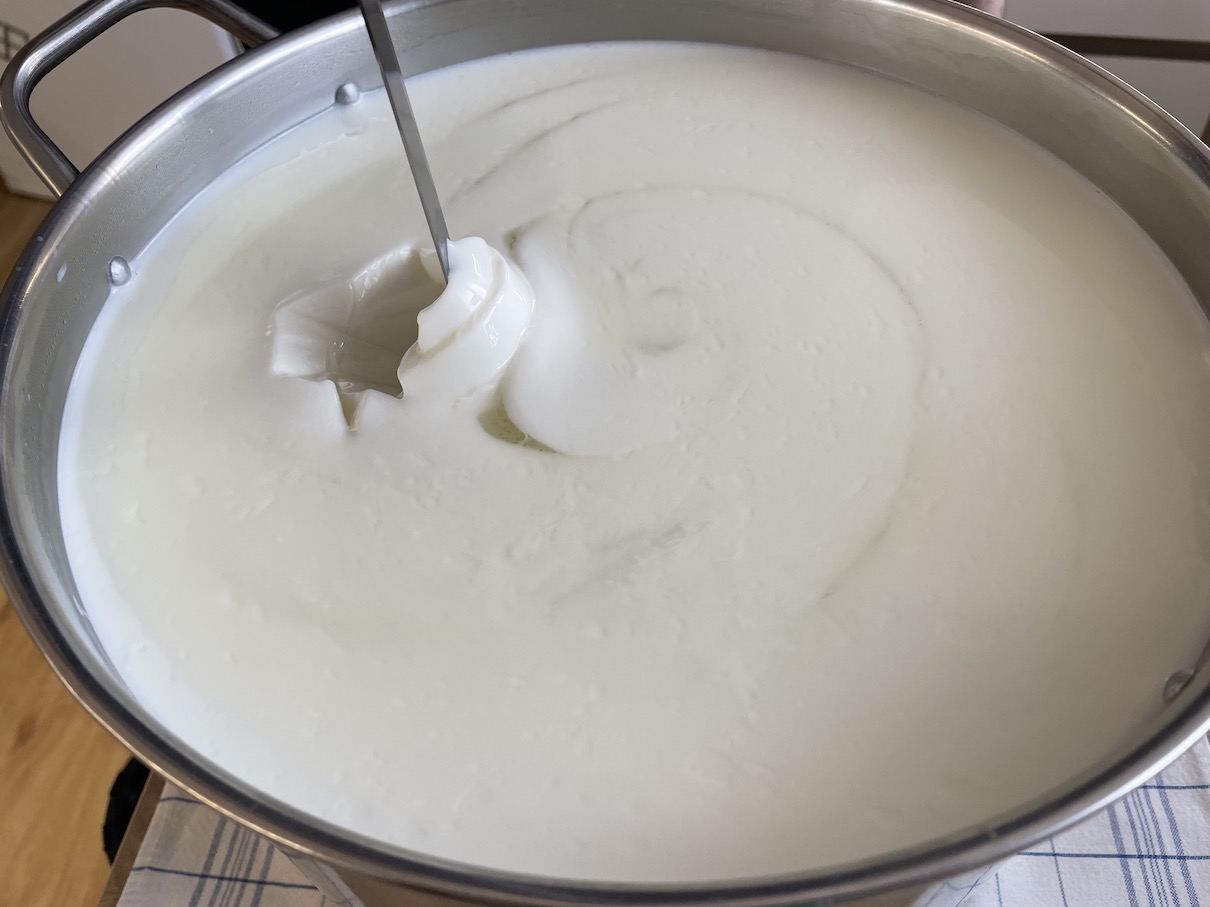
Photo: Radek Stepan
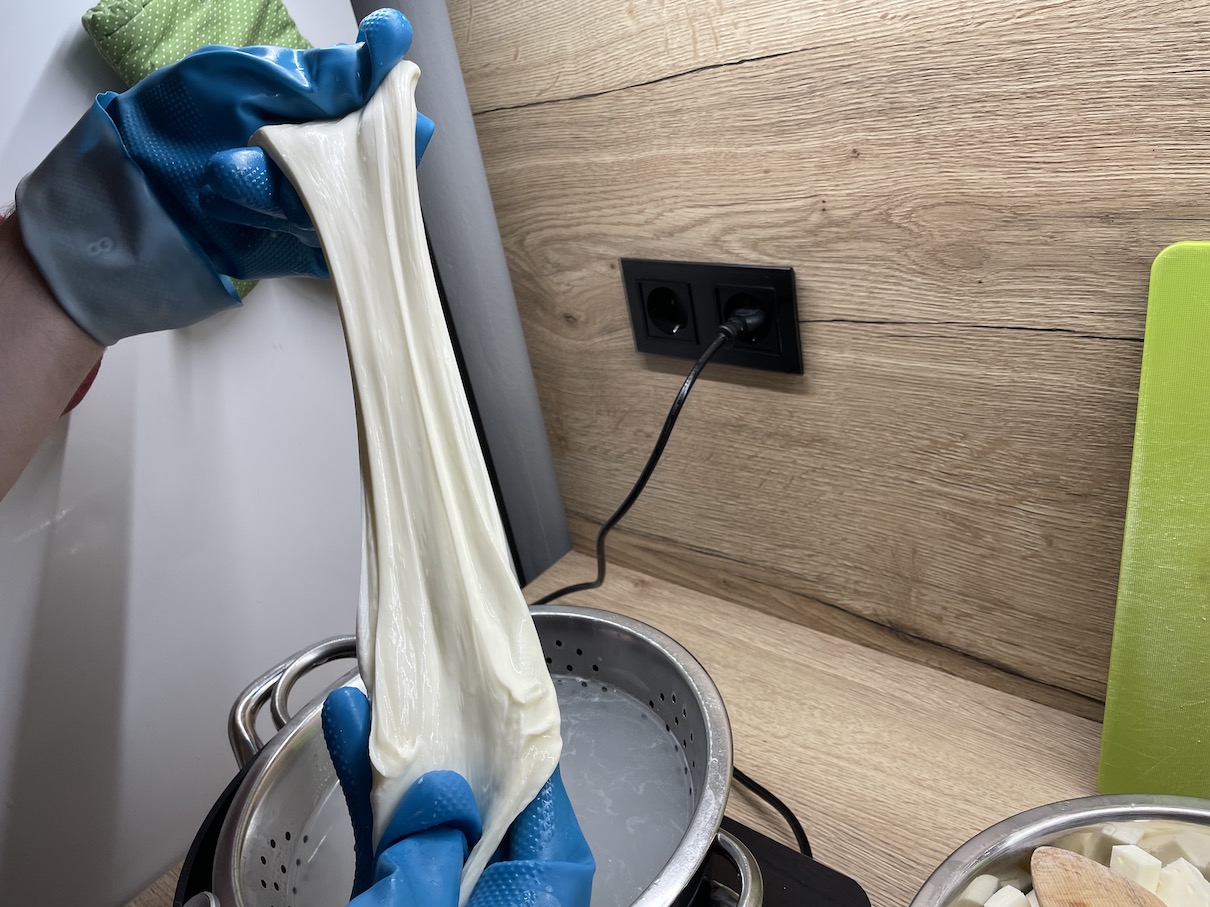
Photo: Radek Stepan
FAQ – Frequently Asked Questions About Making Steamed Cheese at Home
Where can I get milk for steamed cheese?
A small farm or cooperative is ideal.
Where can I buy other ingredients like cultures and rennet?
Commonly online at many e-shops.
How long does the steamed cheese-making process take in total?
About 10 hours. It depends on the fermentation time.
Sources: Author
Photo and gallery: Radek Stepan


Gardening is my hobby, I have a lot of experience and I am happy to share it.




0 comments