
Apple and pear scab: A problem to tackle in October

Are you looking at your apple or pear harvest and the fruit just doesn’t look quite right? It might be because they’re infected with scab. This unpleasant disease can significantly affect the fruit, at least visually. Just take a look at them, and you’ll see the characteristic brown spots—which look rather unappealing—at first glance. The scabs on the skin form for one simple reason: the tree is infected with a fungus that causes the fruit to develop unevenly. Over time, the problem can spread to the point where it essentially destroys the entire harvest. This disease needs to be addressed right now. But we’ll also look at other aspects related to scab.
Preventive measures against scab as a foundation
Preventing scab is especially important. These aren’t complicated measures—they’re relatively easy to implement.
Raking Leaves from Under the Trees
Nothing could be simpler. The fungus that causes scab survives in the leaves on the ground. It thrives in a damp environment. In the fall, it is therefore necessary to rake up all the leaves and remove them from the tree’s vicinity. The fungus (Venturia inaequalis in apple trees, Venturia pirina in pear trees) is relatively resilient. Infected leaves definitely do not belong in the compost. The ideal place for them is the organic waste bin.
Regular pruning of apple trees
Watch out for overly dense tree canopies. Insufficient airflow not only promotes scab but also many other fungal diseases.
Proper tree planting
Even at the time of planting, we should consider what the tree will look like once it has fully grown. Trees should not shade or touch one another. Otherwise, air circulation will be poor, similar to what happens with unpruned trees.
Further tree care
We must also not forget about proper fertilization, adequate watering, and liming of the trees. Only through proper tree care will a specific apple or pear tree ultimately remain sufficiently vigorous.
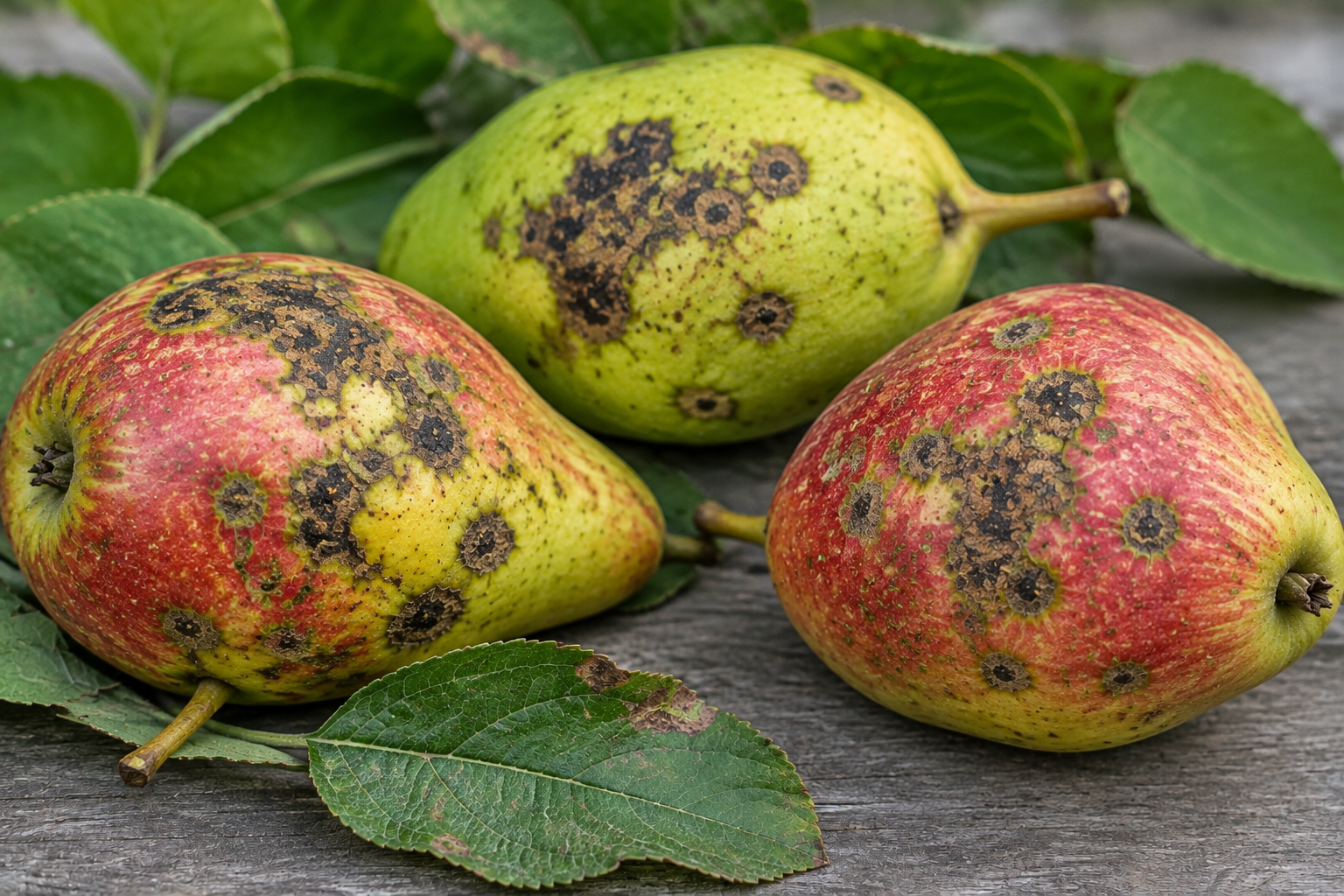
Photo: Chat Day
Spraying matters
It’s definitely worth focusing on spraying the trees themselves. However, this should be done in the spring. It is applied before the trees bloom and also within two weeks after they finish blooming. In total, this involves 4 applications, one every 14 days. Ideally, combine these products with sprays against powdery mildew, which also threatens fruit trees.
Varieties susceptible to scab are well-known
Some apple and pear trees are much more susceptible to scab. Examples include varieties such as:
– Golden Delicious,
– Jonagold,
– Spartan,
– Idared.
On the other hand, the following are not susceptible to scab:
– Topaz,
– Selen,
– Goldstar,
– Rubinola
– or Melodie.
Sources: Author, Meta, https://zahradkarskaporadna.cz/clanek-13273-strupovitost-jabloni,https://www.ireceptar.cz/zahrada/jablone-hrusne-pece-30001009.html
Photo: Chat Day


Gardening is my hobby, I have a lot of experience and I am happy to share it.


0 comments