
November: The month of oyster mushrooms. It’s easy to identify them
Do you love mushrooms in any form? Of course you do. Most of you will surely agree that the best mushrooms are, of course, the fresh ones. There’s nothing quite like bringing home a basket of mushrooms from the forest. Sure, now in November, it’ll be a bit trickier with traditional mushrooms. Still, you can go out in search of oyster mushrooms. Identifying them isn’t all that difficult, and you can pick them without any trouble even when it’s freezing. How can you safely identify this mushroom? We’ll cover that in quite some detail in the following paragraphs.
A Deciduous forest is your destination
To find oyster mushrooms, you need to head to a deciduous forest. Traditionally, it grows on dead or living trunks of deciduous trees such as willow, birch, poplar, walnut, or beech. However, it can also grow on other tree species. In larger quantities, oyster mushrooms begin to grow in the forest starting in September; November and December are ideal months, since many other classic forest mushrooms are no longer being harvested by then.
Tip: Our soup with oyster mushrooms. Delicious taste.
The typical cap of this magnificent mushroom
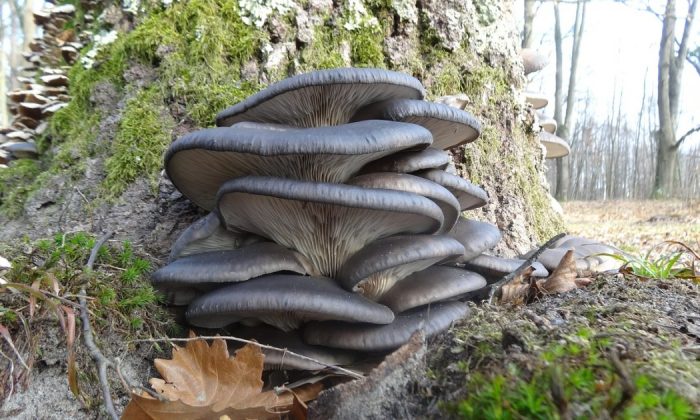
Pleurotus ostreatus, as the oyster mushroom is known in Latin, is characterized by a cap that strikingly resembles an oyster. The name is therefore obvious. The fan-shaped cap can easily reach a maximum diameter of around 25 cm. The edges of the cap are initially curled under in younger specimens, but gradually straighten out and become sharp. The color of the cap depends on the environment in which the mushroom grows. Temperature is also an important factor. The cap is usually gray or brown, but can also be bluish-gray or yellowish-brown.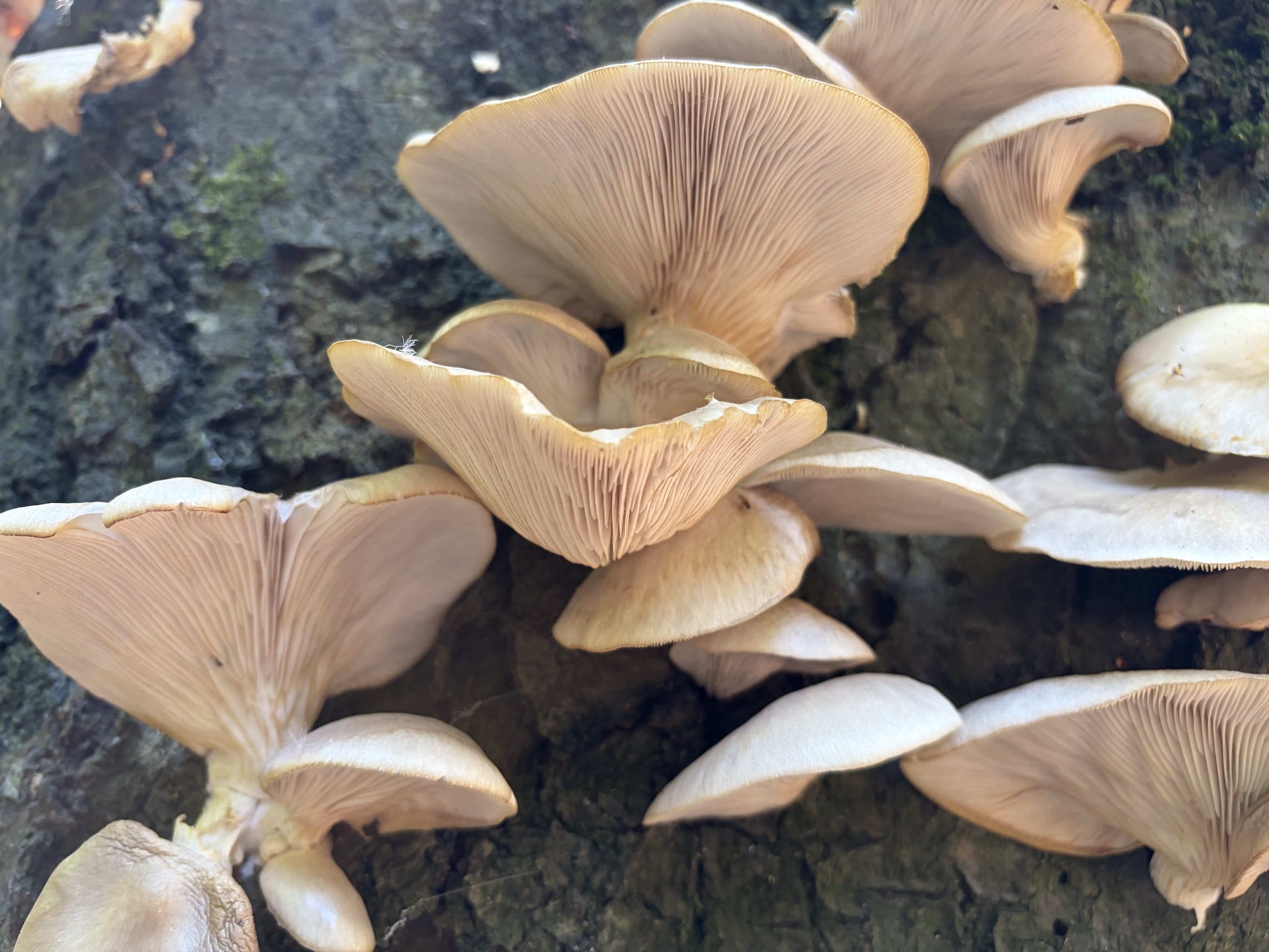
Oyster Mushroom: Photo Radek Stepan
A firm white stem and white gills
Additional identifying characteristics. The gills are very dense and extend deep down the stem. The stem is relatively short, sometimes around 1 cm, but more often about 3 cm. It grows off the side of the cap itself. Often, multiple caps grow from a single stem. This is unlike classic mushrooms, where the stem is in the center of the cap.
Look for clusters
This fact must also be noted. Oyster mushrooms grow in large clusters. These are often clusters, with several growing on a single log at once. Otherwise, oyster mushrooms have a wonderful aroma and are characterized by relatively tender flesh. Just be careful with the lower parts of the stem, which tend to be very tough.
Sources: Author—mushroom hunter
Oyster Mushroom: Photo Pixabay


Gardening is my hobby, I have a lot of experience and I am happy to share it.


0 comments