Ash is not a universal fertilizer. Some plants simply cannot tolerate it

Wood ash is often listed among natural home fertilizers that act as a panacea for certain plants. This may be true, as wood ash does contain a relatively large amount of beneficial substances. Nevertheless, it must be noted that for many plants, it is not a welcome fertilizer that would benefit them. On the contrary, it can actually be harmful. We will therefore take a much closer look at the plants for which wood ash is not suitable in the following paragraphs.
Why isn’t wood ash a universal fertilizer?
The answer to this question is quite simple. Ash reduces soil acidity, which may not suit many plants. This change in nutrient uptake conditions then leads to certain plants simply failing to thrive. In plants that prefer a more acidic environment, this results in yellowing leaves, minimal yields, and often slower growth.
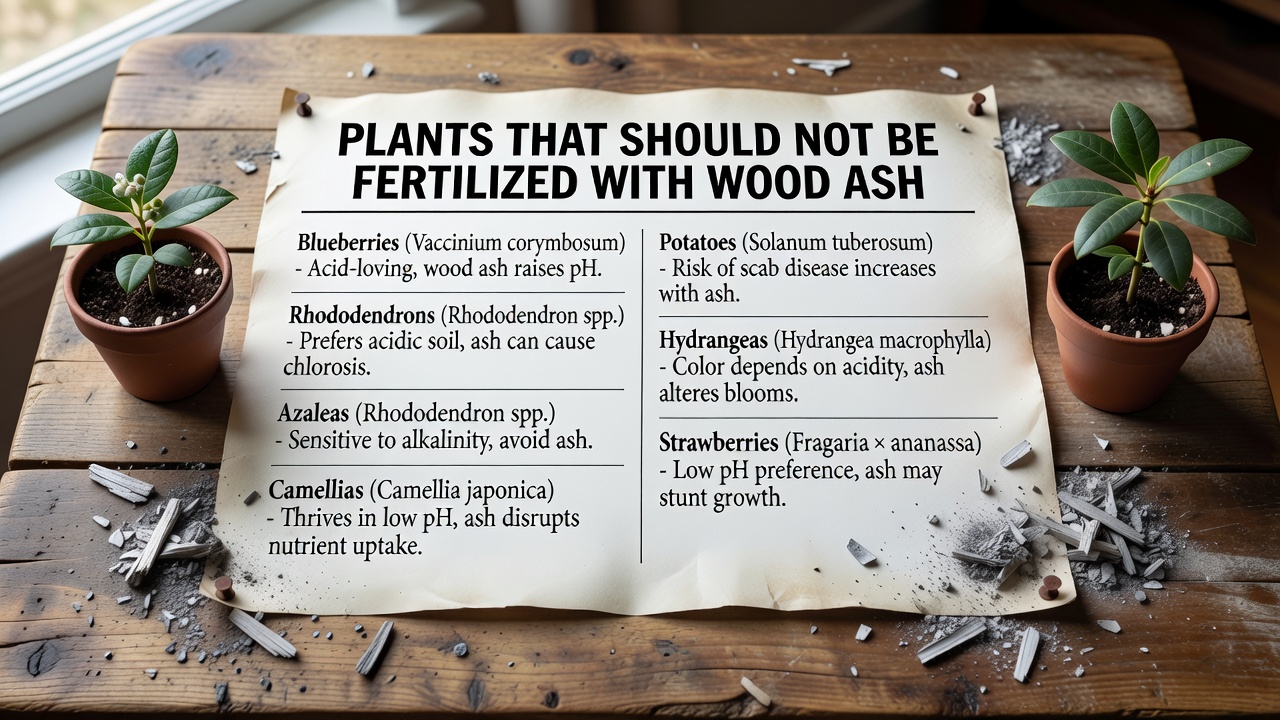
Photo: Chat Day
For Canadian blueberries, forget about wood ash
Canadian blueberries are plants that thrive in acidic environments. If you fertilize them with wood ash, they’ll stop absorbing nutrients. The soil’s pH will change rapidly, causing the blueberry leaves to turn yellow and ultimately leading to their demise. Canadian blueberries undoubtedly require an acidic growing medium; classic peat moss is excellent.
Tip: Canadian blueberries aren’t bearing fruit. Four mistakes could be to blame.
Hydrangea flower colors may change
With hydrangeas, the soil’s acidity level should depend on the specific variety. With large-leaved hydrangeas, the color of the flowers changes depending on the soil’s pH. However, the amount of aluminum in the soil also affects the color. If you love blue hydrangea flowers, it’s best to avoid using wood ash.
The use of ash with potatoes is debatable
Many gardeners use ash when planting potatoes. This isn’t necessarily a bad thing. However, if the soil rapidly loses its acidity, the risk of potato scab increases. The tubers then don’t look very appealing, and it’s not worth it.
Rhododendrons and azaleas don’t deserve ash either
That’s right—they also need acidic soil to thrive. Wood ash will gradually kill them off. Fertilizers designed for acid-loving plants are ideal.
Sources: Author, Meta
Photo: Chat Day


Gardening is my hobby, I have a lot of experience and I am happy to share it.


0 comments