
Almost everyone makes this mistake before winter. When should you mow the lawn for the last time, and how short should you cut it?

Do you stand over your lawn in autumn and tell yourself you’ll give it one last close cut so the garden looks neat over the winter? Let’s be honest, that’s the quickest way to end up with bare and yellow patches in the spring. A green lawn actually needs the exact opposite before the frosts set in.
The basic rule for the end of the season isn’t a specific date on the calendar, but the outdoor temperature. As soon as average temperatures consistently drop below 7 to 10 °C, the grass blades go into hibernation and stop growing. In our climate, this usually happens at the turn of October and November. In fact, as soon as the grass stops growing, don’t even bother getting the mower out. Before winterising the lawn, it is absolutely crucial to get the height of the final mow just right – it should be exactly four centimetres.
Why exactly four centimetres and not a single bit less
If you cut the grass too short, the frost could easily penetrate right down to the root collars and cause irreversible damage to the plant. Longer blades also act as natural insulation and can capture more sunlight. However, you mustn’t let the grass grow too long either. Long blades will immediately flatten under the first layer of snow, creating a completely impermeable cover. In a damp and compacted environment, snow mould then spreads rapidly, capable of destroying the entire garden.
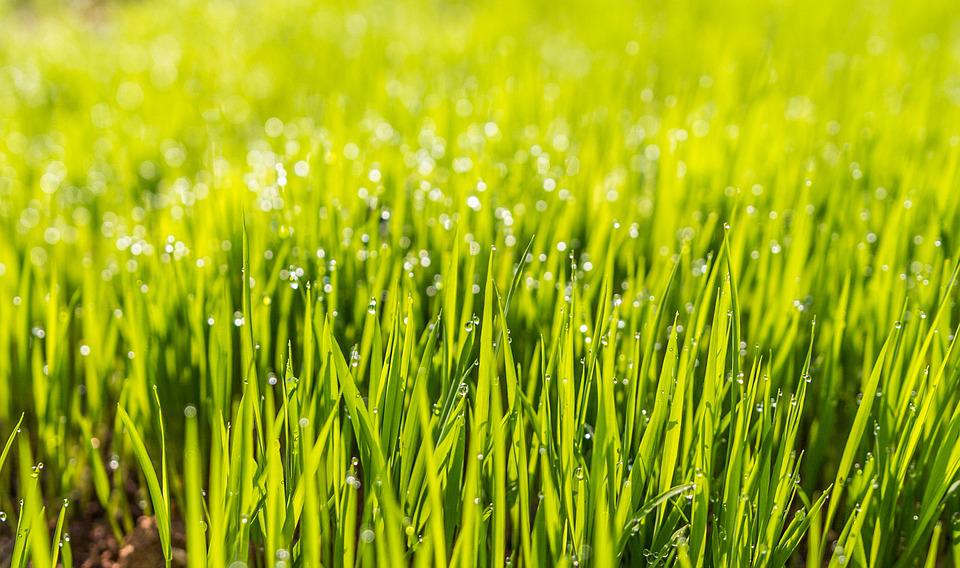
Photo: Pixabay
Tip: A completely dry lawn. It may only seem that way – just do the test and you’ll see
Always avoid mowing wet grass
For your final mow of the season, always wait for a drier afternoon. You must avoid mowing wet or even frozen grass at all costs, as the water in the fragile blades freezes and the mower’s blades would literally shred them. This creates ideal open wounds for harmful fungal infections to enter. After mowing, make sure you apply an autumn fertiliser with a high potassium content and, conversely, a minimum of nitrogen, so that the cell walls mature sufficiently before the frosts set in.
However, there is one more strict warning here that many people tend to ignore. As soon as the winter frosts set in and the lawn is covered in hoarfrost, impose a strict ban on walking on the grass in the garden. Frozen blades of grass are extremely brittle; they’ll snap immediately underfoot, and in the spring you’ll be left with unsightly brown patches where the grass has been trodden, which are very difficult to recover from.
Sources: Author
Featured image: Radek Stepan

Gardening is my hobby, I have a lot of experience and I am happy to share it.





0 comments